Nine pictures, and the short version of what each one means. This is not the rulebook — that is the handbook, and it has every figure in it. This is the shape of the thing: what you are given, what to do with it first, and what happens when somebody decides they want it.

1You start with one village
That is the whole of it. No army, no second village, no head start — and neither has anybody else, however long they have played. A veteran of nine rounds begins the tenth with the same village you get on your first day, which is deliberate and is tested.
The village is raised the first time you look in after a round opens, wherever the map has room. Everything in this game runs in real time whether or not you are watching: timber accumulates, buildings finish, armies walk. Closing the tab does not pause anything.
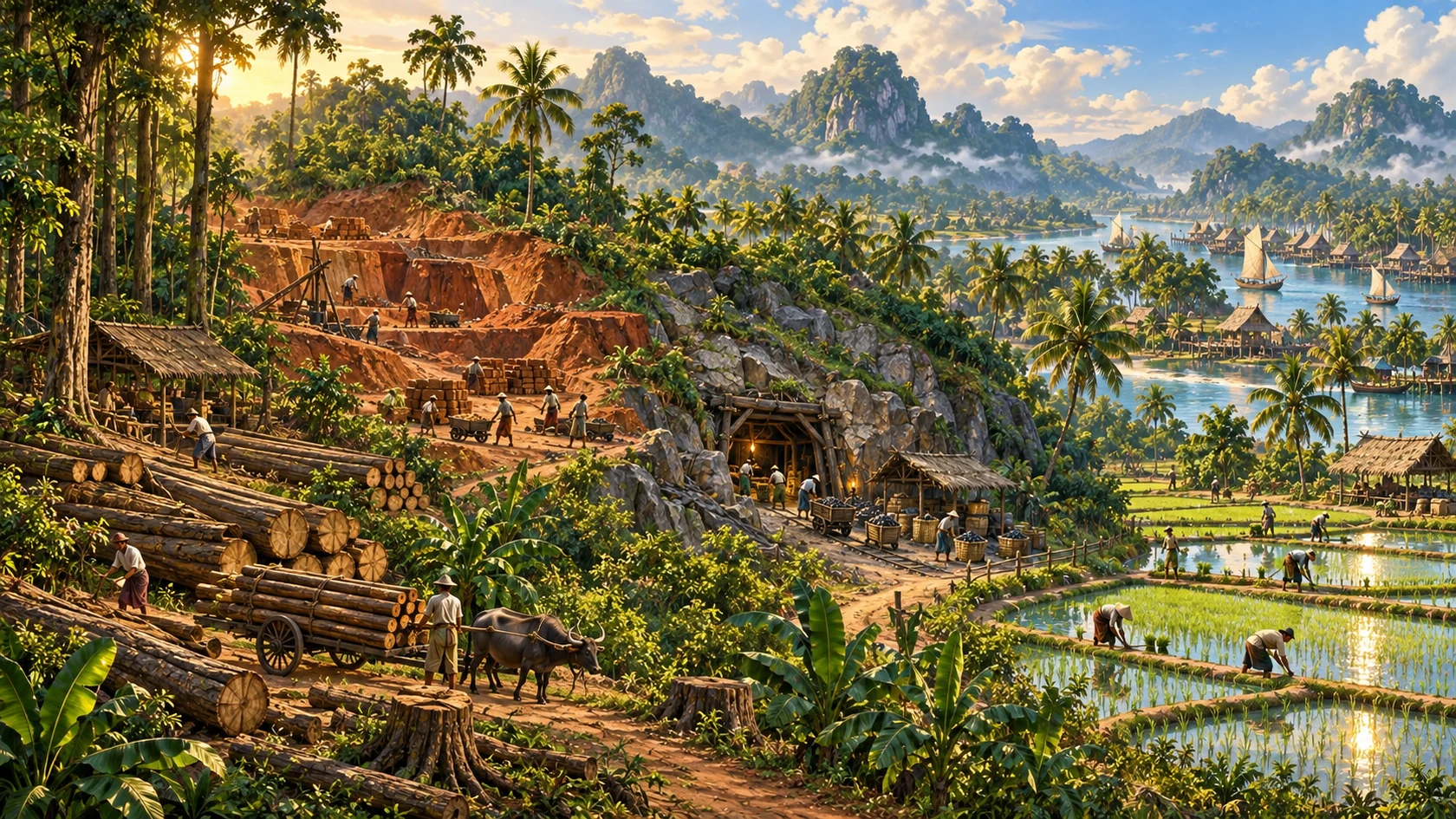
2Four things everything is made of
Timber from the groves, stone from the quarry, iron from the mine, rice from the paddy fields. Every building costs some mixture of the four and every soldier costs them too.
Raise all four together rather than one at a time. A village strong in timber and short of stone is not a village ahead on timber — it is a village waiting for stone, and it will wait exactly as long as if it had built nothing at all.
Every cost and rate: the four resources and what each building does.
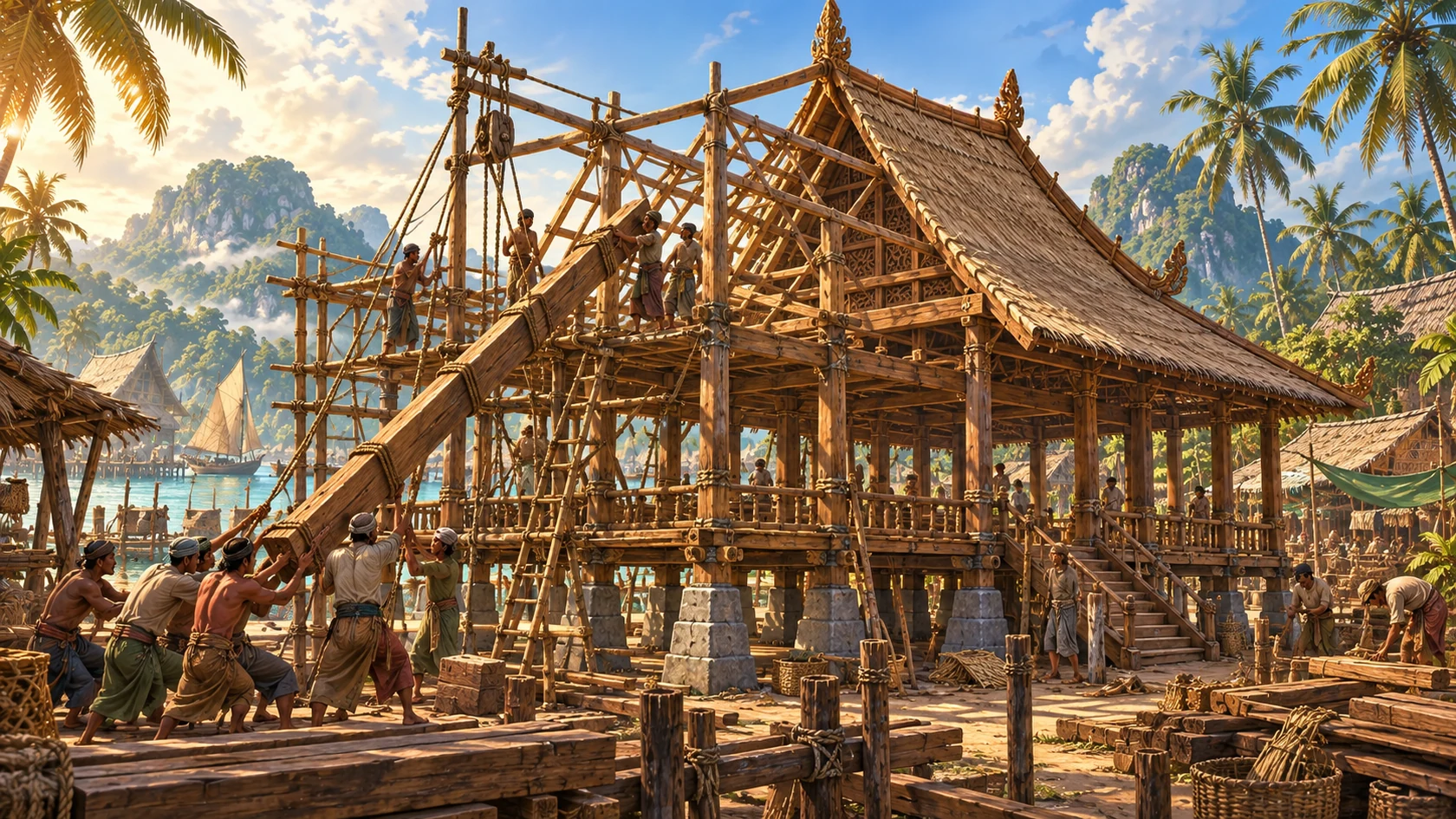
3One thing at a time
A village builds one thing at a time, with a couple more queued behind it. That constraint is most of the early game: the question is never what can I afford, it is what is worth the hours.
Soldiers train on their own separate line, so an army and a building can be under way at the same moment. And if an empty queue at three in the morning bothers you, the Steward is a standing order you leave behind — it builds while you are asleep.
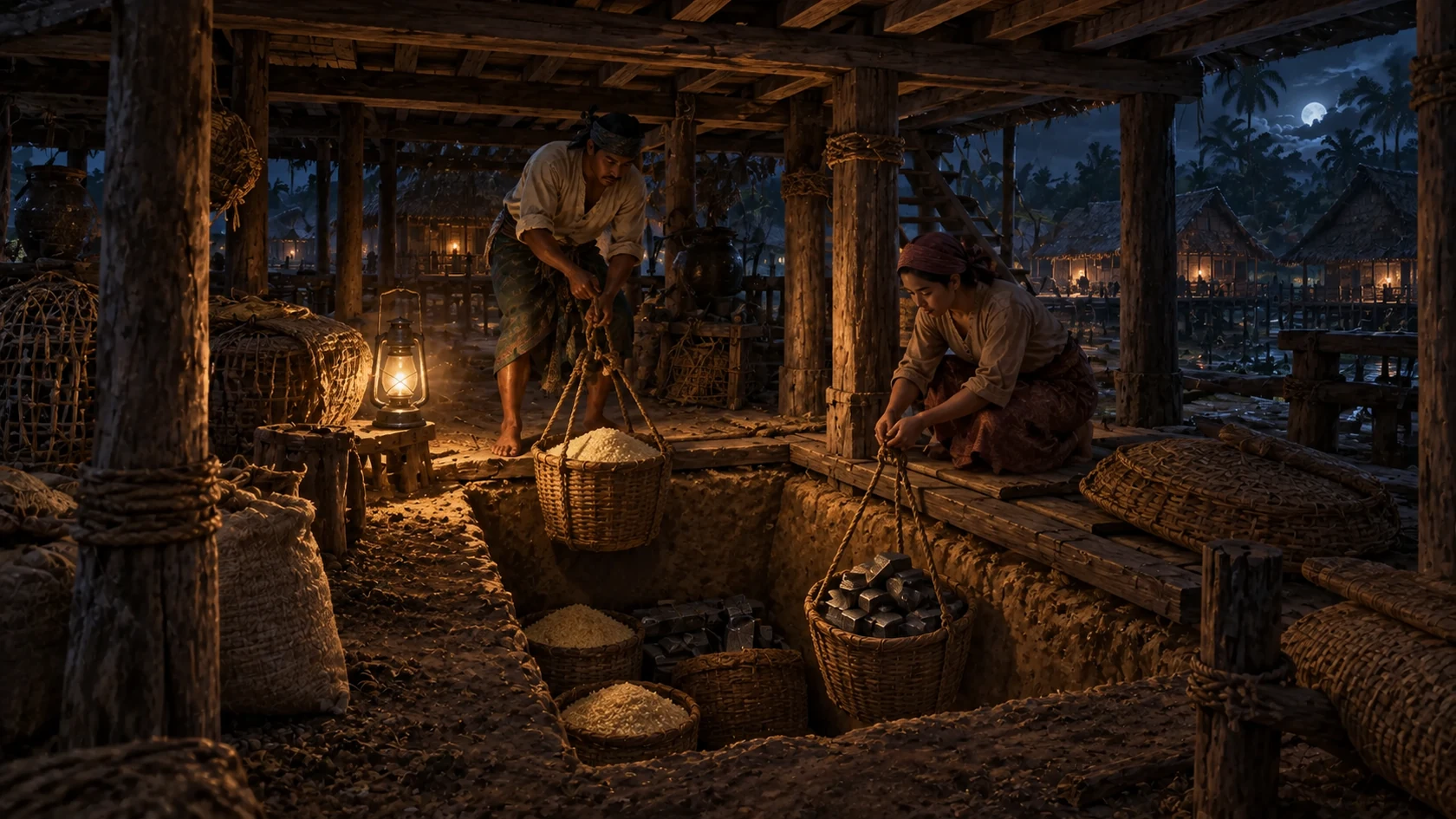
4What a raid cannot take
The Kolong is a cellar dug under the house. Whatever fits in it is hidden from anybody who raids you: they take what is lying in the open and leave what is buried.
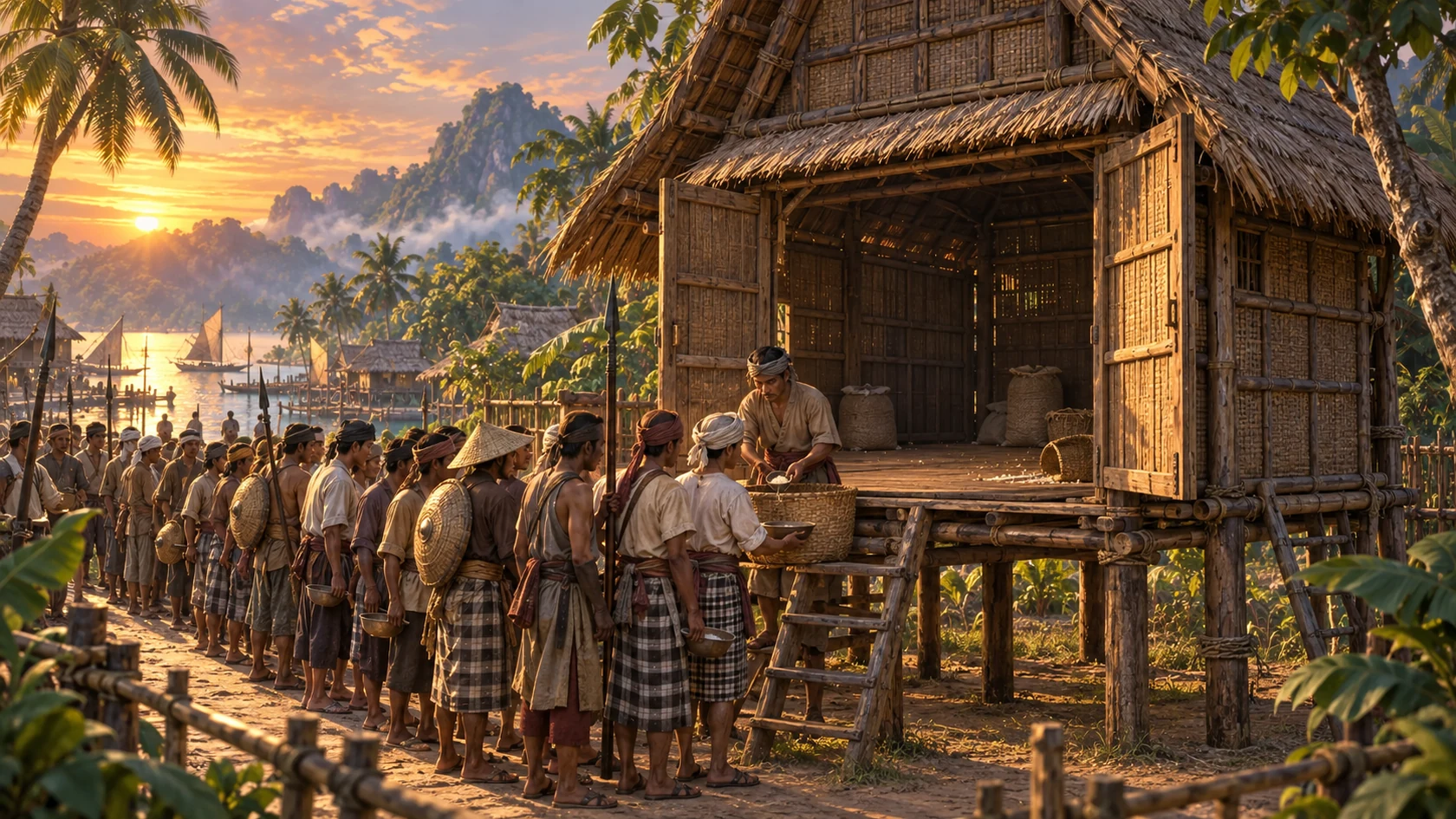
5Rice is not a resource
It is the other three, plus a limit. Villagers eat and soldiers eat, and a village that cannot feed what stands in it does not simply stop growing — soldiers starve, and the number on your muster roll goes down overnight with no battle anywhere near it.
The same arithmetic is why a big army parked in somebody else’s village is still eating — their rice, not yours, which is worth saying out loud before you send help.
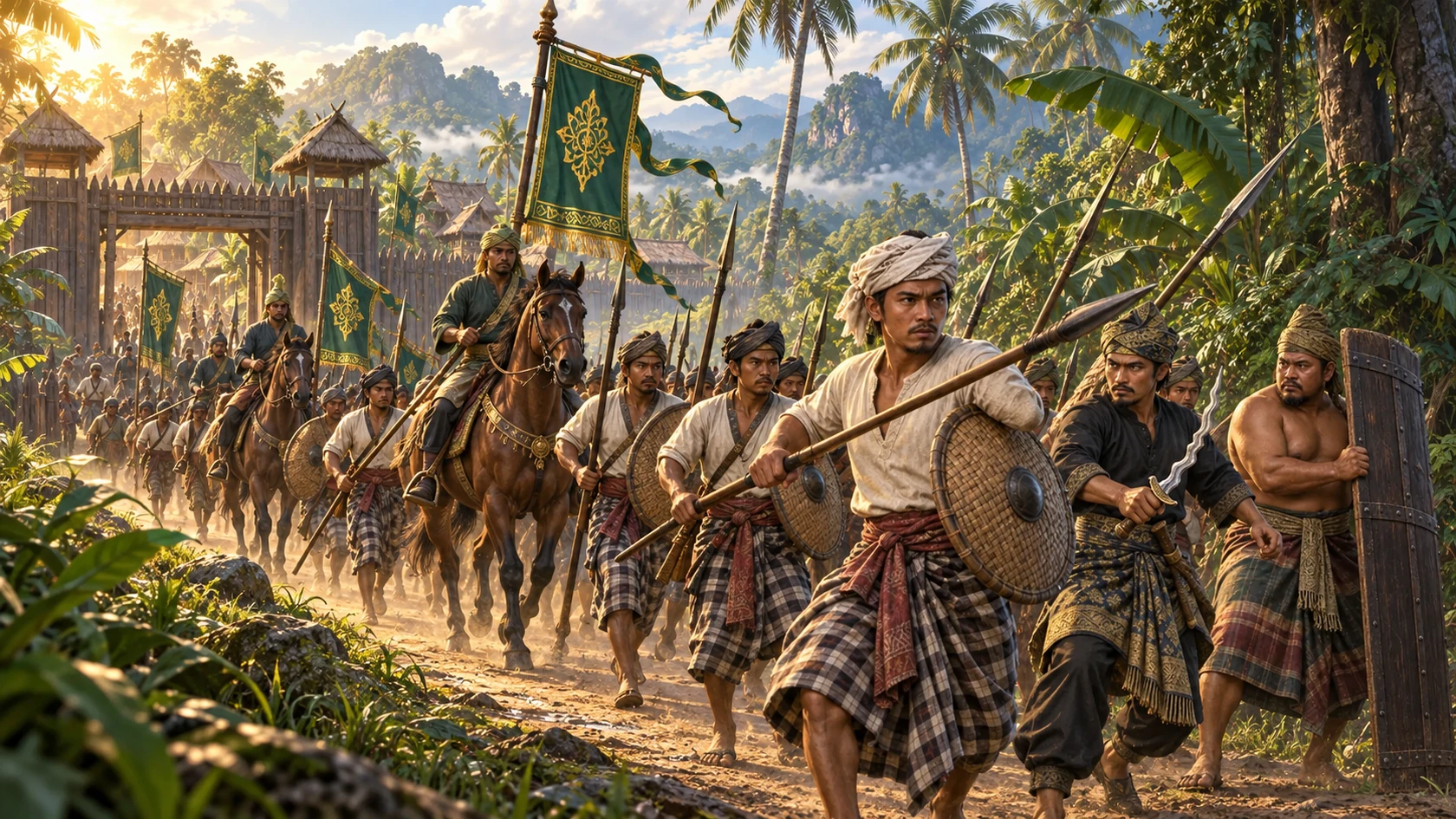
6Armies walk
There is no teleporting anything anywhere. An army sent across the map is on the road for hours, in the open, visible, and the whole column moves at the speed of its slowest member. A single siege engine can halve the pace of everything travelling with it.
You need a Muster Ground before a village can send troops anywhere at all, and the water genuinely means no: a march that would cross too much sea is refused rather than slowed, and getting an army across the strait means ships.
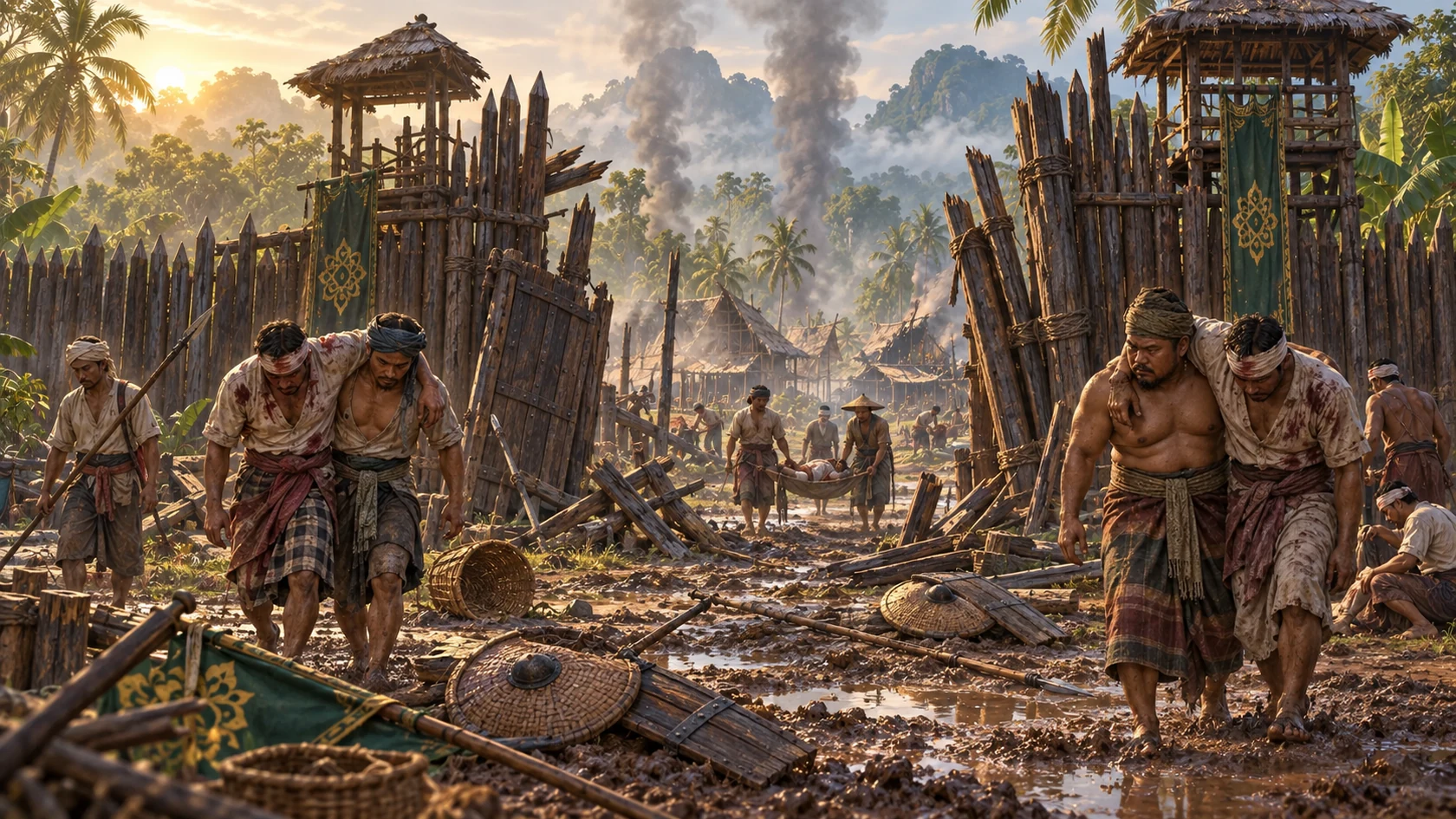
7The morning after
A battle is resolved by the server the instant an army arrives, and both sides get a report. It is not a fight you watch — it is a fight you read about, and the report is where the game actually explains itself: who was there, what died, what was carried off, what got knocked down.
Walls matter, and so does what you brought. Rams break a palisade; throwers flatten buildings; neither of them wins a battle on their own. An assault that arrives with no infantry is an assault that dies at the gate.
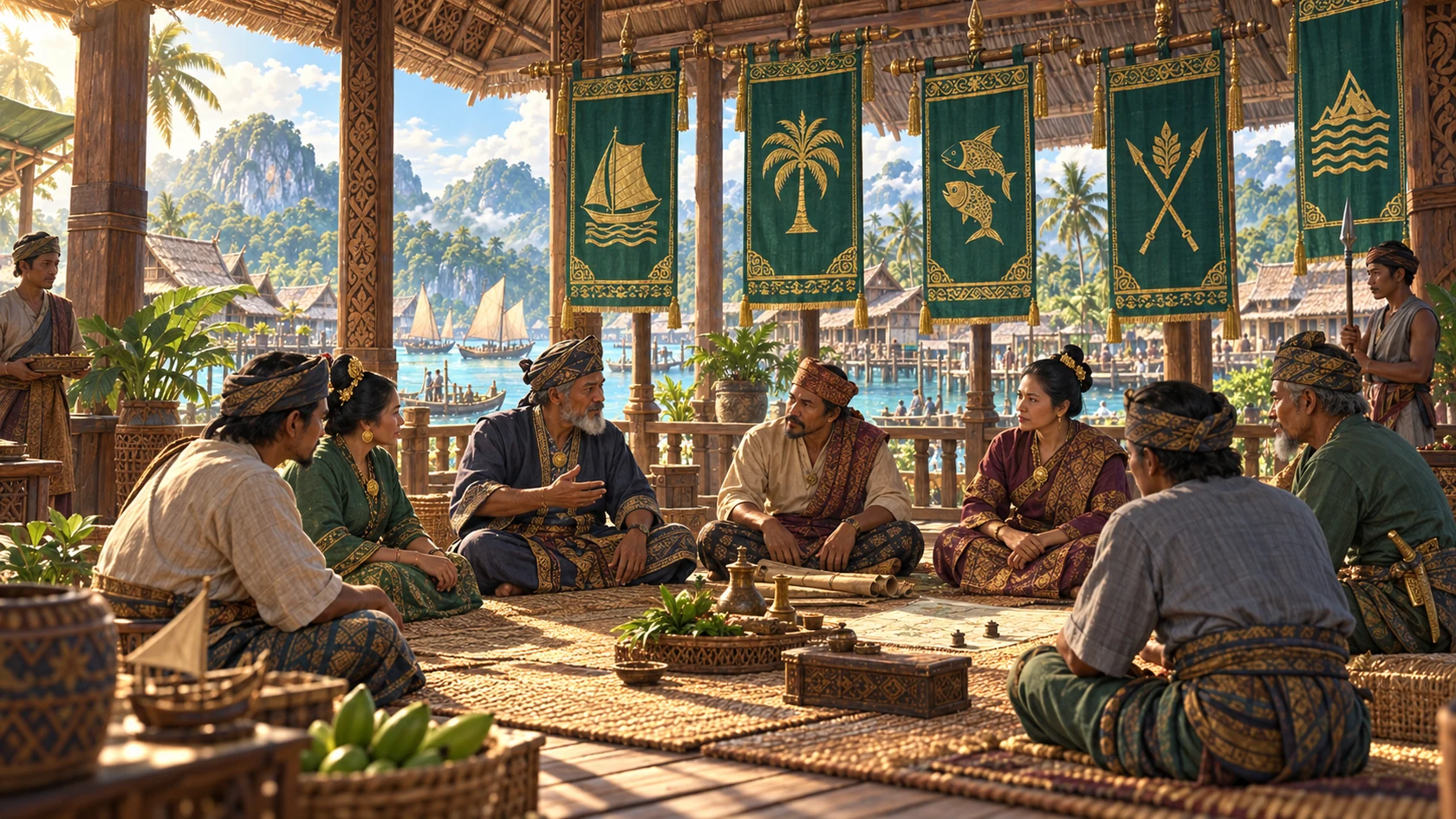
8Nobody survives alone
Join a kingdom early, and a small active one beats a large quiet one every time. What it buys is not a bonus — it is people who answer at four in the morning.
A kingdom can see its members’ incoming attacks, call everyone to one wall, and land a dozen armies on a single hour. Twelve columns that arrive one after another are twelve columns beaten one after another; that is the whole reason coordination exists.

9The round ends
Worlds do not run forever. A round is decided, the standings are frozen into a chronicle that outlasts the map, and a new world opens with everybody back to one village.
You take renown away with you, for having played and for what you did when it counted. It is a memorial and nothing else — it buys no advantage in the next round, on purpose, and there is a test that holds the game to it.
That is the shape of it
Now go and be attacked by somebody
Everything else — every building, every unit, every number, the champion, the bazaar, the Friday night — is in the handbook, and the game will point you at the parts of it you need as you meet them.